Ghwayzi Fort: Guide to Mukalla’s Historic
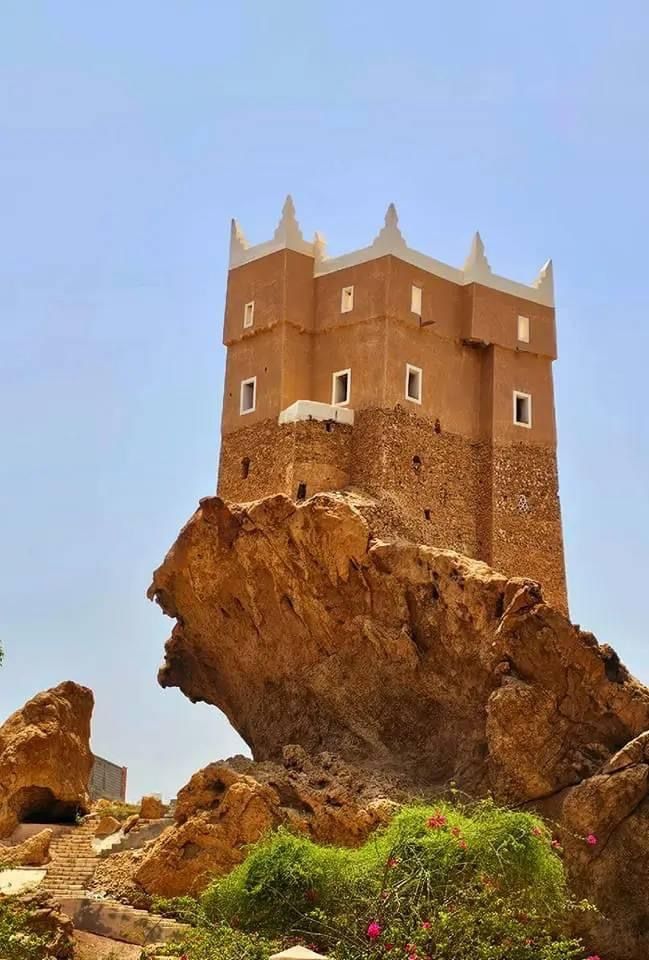
Yemen is rich in a unique architectural and historical heritage that reflects the genius of the Yemeni people in adapting to their rugged terrain, transforming solid rocks into fortified castles and citadels. Among these prominent historical landmarks, Al-Ghwayzi Fort (or Al-Ghwayzi Castle) stands as one of the most important archaeological and tourist symbols in the city of Mukalla, the capital of Hadramout Governorate. This fort is not merely an ancient military structure; it is an engineering masterpiece that embodies a history full of defense and pride, becoming today the most prominent visual identity adorning postage stamps, banknotes, and commemorative plaques for the city of Mukalla.
Table of Contents
Geographical and Strategic Location
Al-Ghwayzi Fort is located at the northeastern entrance of Mukalla, a vital coastal city overlooking the Arabian Sea. The site of the fort was chosen with great care that goes beyond mere aesthetic appeal; it was built on top of a high, detached rock formation that completely overlooks the land route leading into the city.
This strategic location gave the fort a massive military advantage in past eras, as it served as the city’s first line of defense and its watchful eyes against any advancing land attacks or raids coming from Wadi Ain or the internal regions of Hadramout. Whoever controlled Al-Ghwayzi Fort effectively controlled the key land gateway to the capital of the Hadramout coast.
Historical Overview and Establishment
The establishment of Al-Ghwayzi Fort dates back to the year 1716 AD, during the reign of the Al-Kasad emirate, which ruled Mukalla at that time. The primary purpose of its construction was strictly military and defensive, as the emirate faced continuous threats from neighboring tribes and competing powers seeking control over the strategic port of Mukalla.
Over time and with shifting political powers, the fort continued to be utilized during the Qu’aiti Sultanate, which further developed the city’s defensive system. With the evolution of weaponry and the emergence of modern means of defense, the military importance of the fort gradually declined. In the modern era, it transformed from a closed military barracks into a historical destination and an archaeological landmark that tells visitors stories from Hadramout’s ancient history.
Architectural and Engineering Genius
Al-Ghwayzi Fort consists of a multi-story building that blends stunningly with the natural rock it rests upon, appearing to onlookers from afar as an inseparable part of the mountain’s geological formation. The fort was built entirely using traditional local materials that have proven their efficiency and resistance to climatic factors over the centuries:
- Primary Materials: The walls were constructed using Al-Laban (mud bricks mixed with straw and dried in the sun) and plaster, while palm tree trunks were used to support the ceilings and floors.
- Exterior Design: The fort features walls that lean slightly inward—a famous Hadrami architectural style that gives mud buildings greater stability and resistance against tremors and weathering. The windows and openings are adorned with simple and elegant geometric arches.
- Defensive Fortifications: Small circular and rectangular openings known as “mazaghel” (loopholes) pierce the fort’s walls from all sides, designed for rifle and traditional cannon barrels to protect the shooters inside while repelling attackers. The fort is crowned at the top with crenellated parapets that provide guards with a full 360-degree viewing angle.
Internal Structure of the Fort
Upon entering the fort through its thick, fortified wooden gate, visitors are transported to an 18th-century world. The interior of the fort consists of several sections distributed across its floors:
- The Ground Floor: This floor was mostly used as storehouses for grains, food supplies, and military ammunition to ensure the military garrison could hold out in the event of a long siege. It also contains an excavated reservoir for storing and collecting rainwater.
- The Second and Third Floors: These floors house rooms dedicated to the accommodation of on-duty soldiers and commanders. These rooms feature small, elevated windows designed to let in light and ventilation while maintaining military security.
- The Roof and Watchtowers: The roof features an open courtyard surrounded by the upper walls of the fort. In its corners sit small watchtowers (nobat) where guards stood day and night to monitor the city’s land horizon.
Tourist Importance and Current Status
Today, Al-Ghwayzi Fort represents the primary tourist destination for anyone visiting the city of Mukalla. Climbing to the vicinity of the fort rewards visitors with a charming panoramic view that brings together the towering mountains of Mukalla, its ancient neighborhoods, and the blue expanse of the Arabian Sea.
Historical Note: Due to its great symbolic status, cultural and tourism authorities in Yemen prioritize the preservation of the fort. Despite the environmental and human challenges facing mud buildings, periodic restoration work using traditional mud remains essential to maintain the structural integrity of this historical monument against rain and coastal humidity.
Where exactly is Al-Ghwayzi Fort located?
Al-Ghwayzi Fort is located at the northeastern entrance of the city of Mukalla, the capital of Hadramout Governorate in southern Yemen, perched atop a high rock formation overlooking the city’s ancient land route.
When was Al-Ghwayzi Fort built and who built it?
The fort was built in the year 1716 AD (18th century) during the reign of the Al-Kasad emirate, which ruled the city of Mukalla during that historical period.