A Journey to Al-Muhdaar Mosque 5 Reasons Why Visiting This Historic Landmark With Us Is an Unforgettable Experience
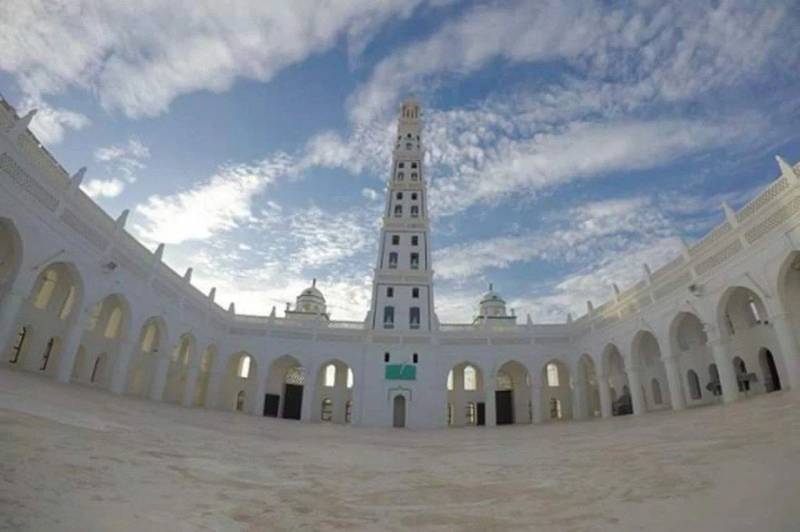
1-Introduction to the Mosque
Al-Muhdaar Mosque, located in the ancient city of Tarim in Hadhramaut, Yemen, is one of the most remarkable Islamic landmarks in the Arabian Peninsula. It is widely recognized for its towering mud-brick minaret, which dominates the skyline of Tarim and represents centuries of Islamic architecture and cultural heritage.
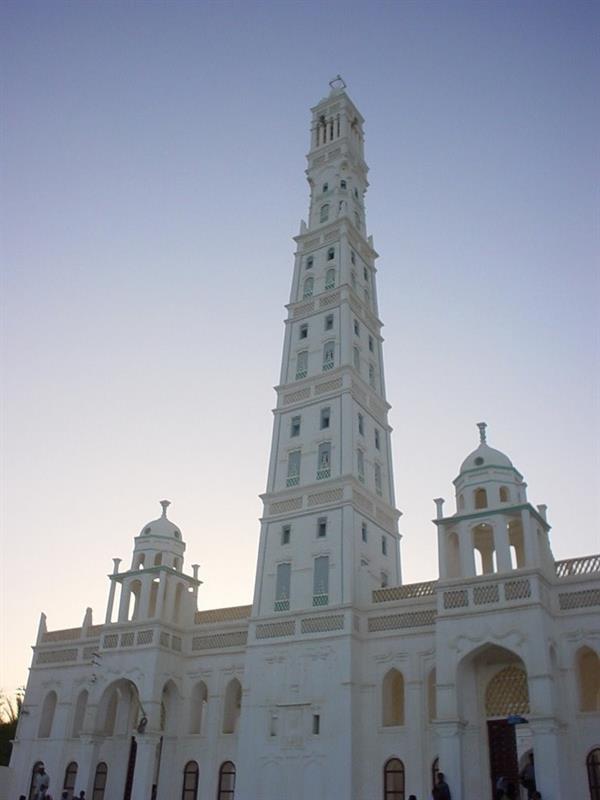
This photograph captures the architectural grandeur of the Al-Mihdhar Mosque, famous for having one of the tallest mud-brick minarets in the world. The image emphasizes the brilliant white facade, the detailed Islamic geometric patterns of the tower, and the graceful domes, all set against a vibrant, clear sky, showcasing the mosque’s unique aesthetic and cultural heritage.
2-History of Al-Muhdaar Mosque
Al-Muhdaar Mosque was constructed during the 16th century, a period when Tarim was considered one of the most important centers of Islamic learning in southern Arabia. The city attracted scholars, students, and travelers from across the Islamic world.
The mosque is closely associated with the legacy of Imam Al-Muhdaar, a respected Islamic scholar whose teachings contributed to the religious development of the region. Over time, the mosque became a central hub for prayer, education, and community gatherings.
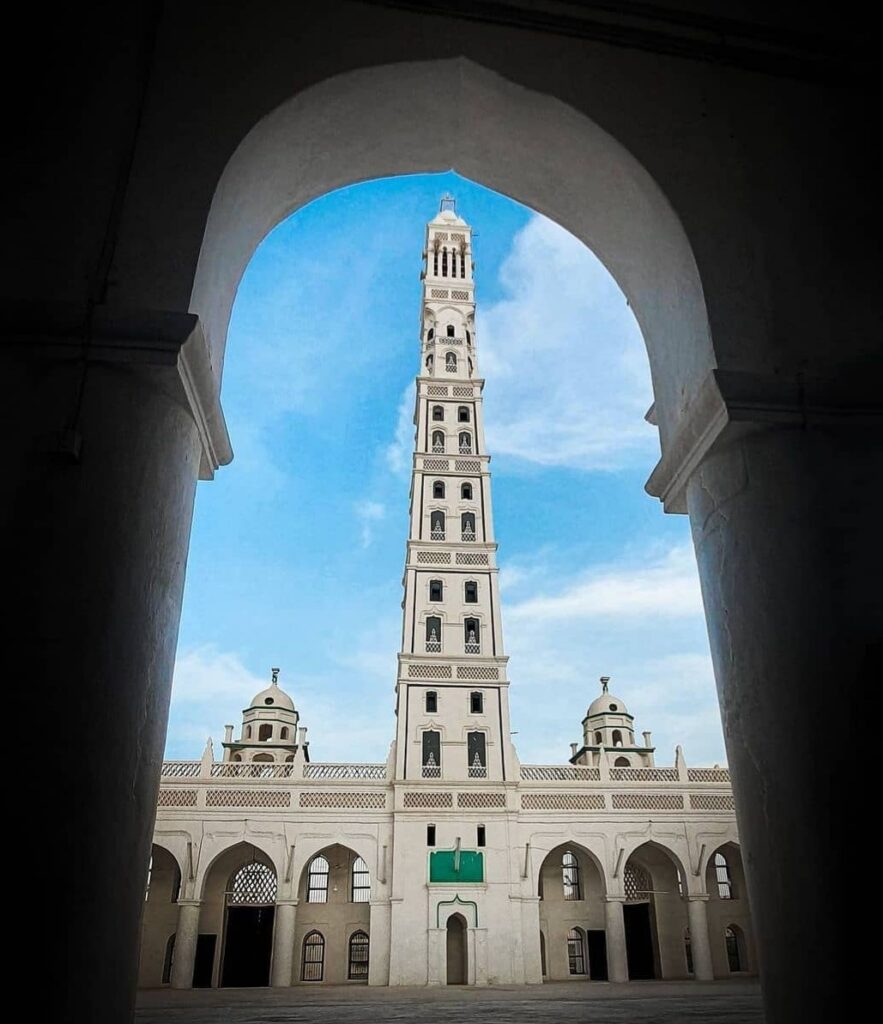
This photograph captures the symmetrical beauty of the Al-Mihdhar Mosque, showcasing its brilliant white structure, dark arched doorways, and the remarkably tall, tiered minaret that dominates the skyline. The bright sunlight accentuates the architectural details and the clean lines of this historic landmark, set perfectly against a cloudless, deep blue sky.
3- Unique Mud-Brick Architecture
One of the most fascinating features of Al-Muhdaar Mosque is its extraordinary mud-brick construction, especially its minaret, which is considered one of the tallest mud structures in the world.
The architecture reflects the genius of Hadhrami builders who used simple natural materials such as mud, straw, and wood to create highly durable structures capable of withstanding harsh desert climates.
Key architectural features include:
A towering multi-level mud-brick minaret
Wooden beams used for structural reinforcement
Islamic geometric patterns carved into the design
Thick walls that regulate temperature naturally
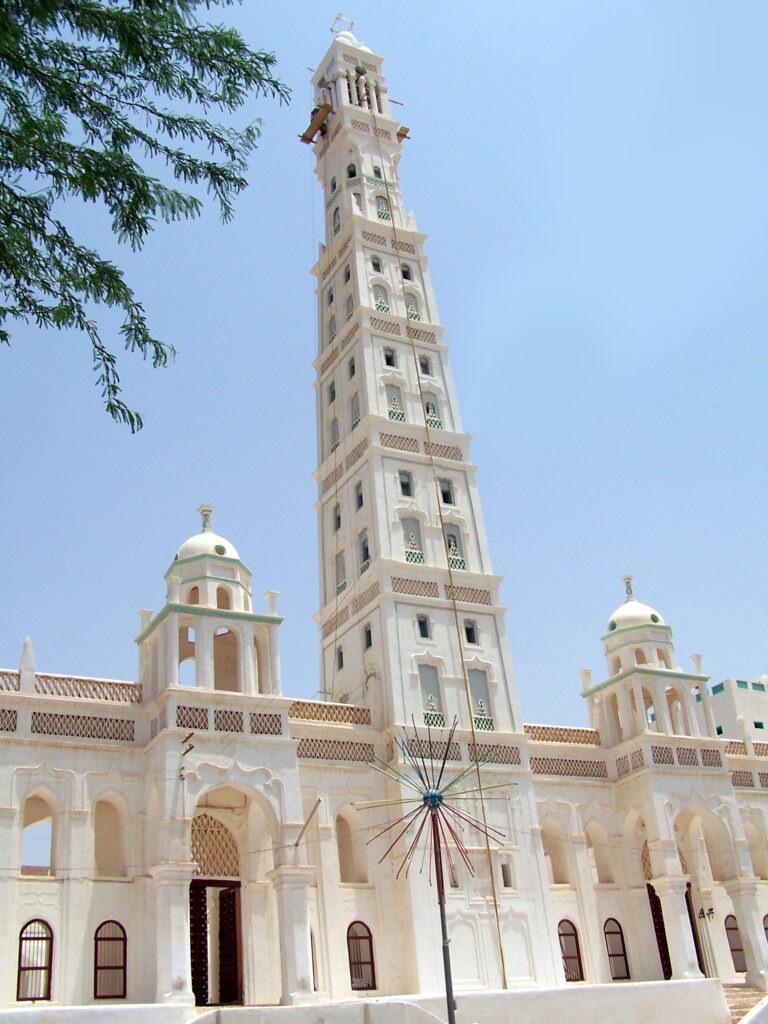
This photograph beautifully captures the Al-Mihdhar Mosque bathed in brilliant sunlight, which emphasizes the crisp white surfaces of its walls and domes. The composition focuses on the architectural harmony of the structure, featuring the iconic, slender minaret as the central element reaching toward the vibrant blue sky, epitomizing the serene and monumental beauty of this historic landmark.
4- Cultural and Religious Importance
Al-Muhdaar Mosque is not just a religious site; it is a cultural symbol representing the identity of Tarim and Hadhramaut. The city itself is known as a “city of scholars” due to its deep-rooted Islamic education tradition.
The mosque continues to play an active role in:
Daily prayers and religious activities
Islamic education and teachings
Cultural preservation of Hadhrami identity
Attracting international visitors and researchers
This photograph provides a full-scale view of the Al-Mihdhar Mosque under bright daylight. The image highlights the structure’s impressive symmetry, from the iconic towering minaret to the detailed arched entrances and side domes, all set against a vast, clear blue sky, capturing the monumental character of this historic landmark.
5-Yemen Heritage Tours | Travel with Yemen Heritage Tours
Yemen Heritage Tours is a local travel company dedicated to providing organized and meaningful experiences for Hadhramaut Tourism.
We offer:
Professional local guides
Customized travel itineraries
Transportation services
Cultural and historical tours
Full travel assistance during the journey
Where is Al-Muhdaar Mosque located?
It is located in Tarim, Hadhramaut Governorate, Yemen.
Why is Al-Muhdaar Mosque famous?
Because of its tall mud-brick minaret and historical Islamic significance.
When was Al-Muhdaar Mosque built?
It was built in the 16th century during the Islamic scholarly era of Tarim.
Is the mosque still active today?
Yes, it is still used for prayer and religious education.