4 Best Places to Visit in Yemen: History, Nature and Heritage
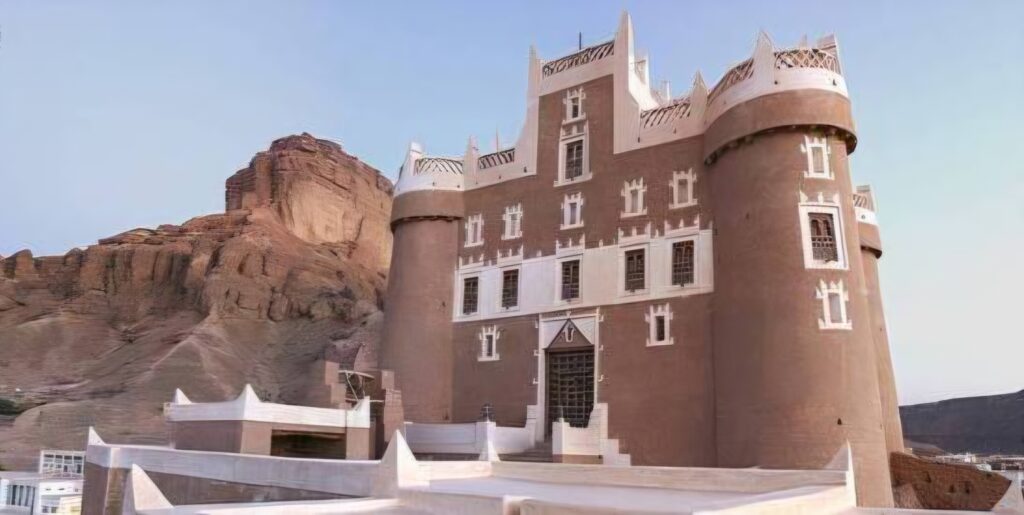
Yemen is a country with a remarkable cultural and natural heritage. From historic forts and traditional palaces to mist-covered forests and villages built on dramatic rocky hills, its landscapes tell stories of centuries of history, architecture, and human connection with nature.
Among the many remarkable destinations in Yemen, four places stand out for their distinctive character: Al-Falas Fort in Seiyun, Al Kathiri Palace, Hawf Nature Reserve in Al Mahrah, and Haid Al-Jazil in Wadi Daw’an. Each offers a different perspective on Yemen’s heritage, making them fascinating subjects for anyone interested in history, architecture, and natural landscapes.
1. Al-Falas Fort: A Historic Landmark in Seiyun
Located in the Al-Qarn neighborhood of Seiyun, in Hadhramaut Governorate, Al-Falas Fort is a historic landmark associated with the city’s defensive and architectural heritage. Its position on a rocky hill gives it a distinctive presence within the surrounding landscape.
The fort reflects the historical importance of Seiyun as a center of settlement and political activity in Wadi Hadhramaut. Its elevated location also illustrates the strategic value of hilltop structures in traditional Yemeni architecture, where natural terrain could contribute to protection and visibility.
What Makes Al-Falas Fort Special?
Al-Falas Fort is notable for its location, historical character, and connection to the heritage of Seiyun. It offers an opportunity to explore a lesser-known part of Hadhramaut’s architectural history beyond the region’s more widely recognized landmarks.
Although its precise construction date and historical development require further documentation, the fort remains an interesting part of Seiyun’s historic landscape.
2. Al Kathiri Palace: The Historic Palace of Seiyun
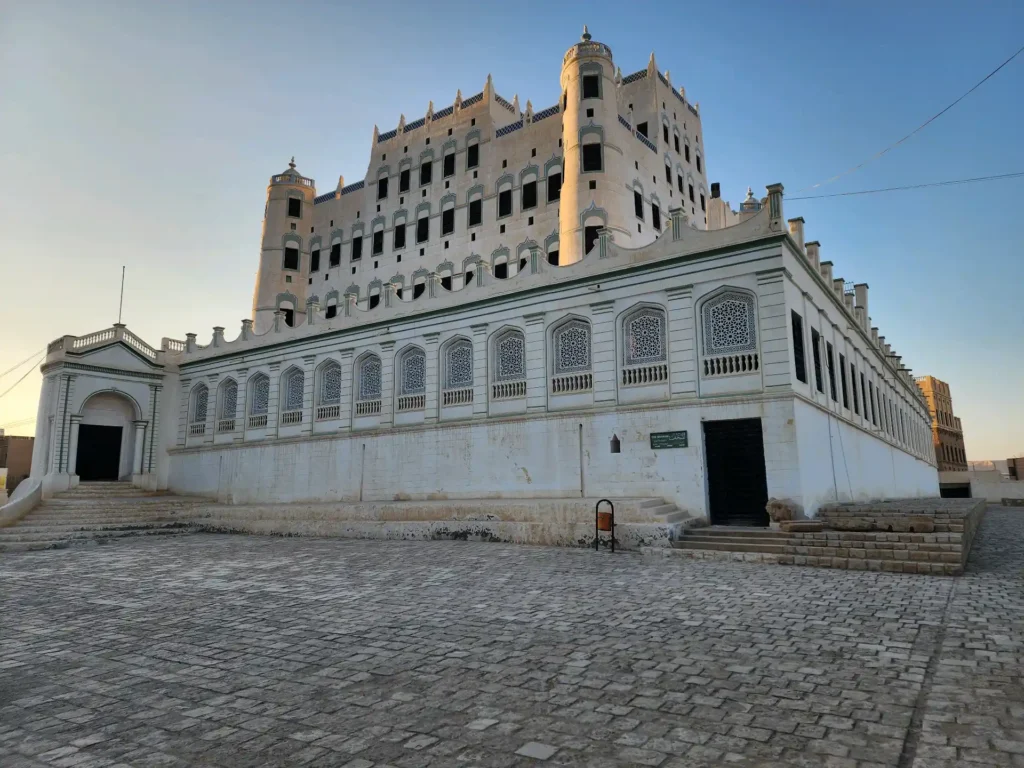
Al Kathiri Palace, also known as Seiyun Palace, is one of the most recognizable historic buildings in Hadhramaut. Located in the heart of Seiyun, the palace stands on a natural rocky mound and is distinguished by its impressive multi-story structure and traditional mud-brick architecture.
The palace covers an area of approximately 6,600 square meters and rises about 34 meters above its natural rocky base. Its seven stories, corner towers, and distinctive exterior make it an important example of traditional architecture in Yemen.
According to the UNESCO World Heritage Centre, the palace became the official residence of Sultan Badr bin Abdullah Al-Kathiri, known as Abu Tuwairiq, in 926 AH (1519 CE). He renovated the building, and later Kathiri sultans continued to develop it over the following years.
What Makes Al Kathiri Palace Special?
Al Kathiri Palace is significant for both its architectural design and its place in the political history of Hadhramaut. Its mud-brick construction demonstrates the use of traditional local building materials, while its height and layout give it a distinctive appearance within Seiyun.
The palace is also an important cultural landmark and a symbol of the historical legacy of the Kathiri Sultanate. Its architectural and historical value makes it one of the most remarkable heritage sites in the region.

3. Hawf Nature Reserve: A Remarkable Natural Landscape in Al Mahrah
Located in Al Mahrah Governorate in eastern Yemen, near the border with Oman, Hawf Nature Reserve is known for its mountains, valleys, forests, and seasonal fog. Its natural environment creates a striking contrast with the dry landscapes found in many other parts of the Arabian Peninsula.
The protected area covers approximately 30,000 hectares, with mountainous terrain rising from sea level to around 1,400 meters. During the seasonal fog period, which generally occurs between June and September, mist spreads across the mountains and forested slopes, creating a distinctive natural atmosphere.
Available biodiversity records report approximately 220 plant species and 65 bird species in the area. These figures highlight the ecological importance of Hawf and its role in supporting a variety of plant and animal life. Further information is available through the Yemen Biodiversity Clearing-House Mechanism.
What Makes Hawf Nature Reserve Special?
Hawf is especially notable for its seasonal climate, forested mountain slopes, and biological diversity. The combination of coastal influences, mountain elevations, and seasonal moisture supports a natural environment that differs from the surrounding arid regions.
For people interested in nature and environmental heritage, Hawf represents an important example of Yemen’s ecological diversity. Protecting its forests, wildlife, and natural resources is essential to preserving this distinctive landscape.
4. Haid Al-Jazil: A Traditional Village Above the Valley
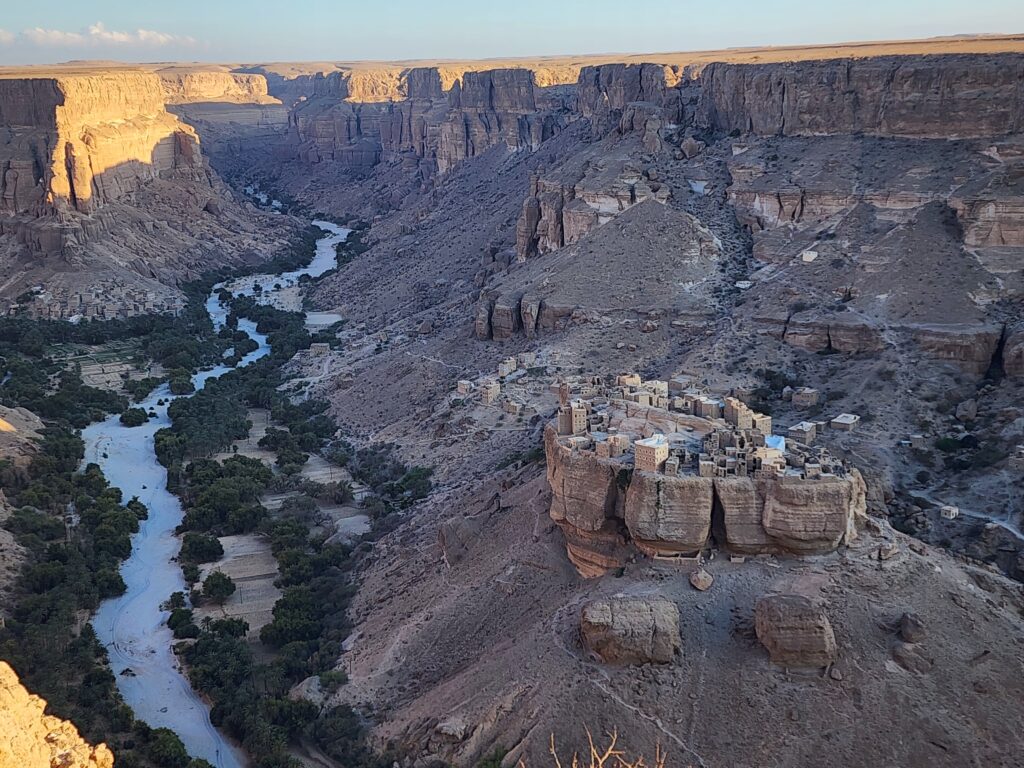
Haid Al-Jazil is a remarkable traditional village in Wadi Daw’an, Hadhramaut Governorate. Built on a dramatic rocky outcrop, the village is known for its distinctive position above the surrounding valley and its traditional architecture.
The buildings reflect the architectural traditions of Hadhramaut, where local materials such as mud, straw, stone, and wood have long been used in construction. These materials and building techniques demonstrate how communities adapted their homes to the local environment and mountainous terrain.
The village forms part of the wider cultural landscape of Wadi Daw’an, a valley known for its historic settlements, traditional buildings, agricultural heritage, and distinctive architectural character.
What Makes Haid Al-Jazil Special?
One of the most striking features of Haid Al-Jazil is the relationship between its traditional buildings and the rocky landscape. The village’s elevated position creates a distinctive architectural scene and illustrates the close connection between local communities and their natural surroundings.
In June 2025, Haid Al-Jazil and Wadi Daw’an were submitted to UNESCO’s World Heritage Tentative List. This submission recognizes the cultural landscape’s architectural character, traditional settlements, and long-standing relationship between people and the environment.
Inclusion on the Tentative List is an important step in the World Heritage process, but it does not mean that the site has already been inscribed on UNESCO’s World Heritage List.
Discovering Yemen’s Historic and Natural Heritage
Al-Falas Fort, Al Kathiri Palace, Hawf Nature Reserve, and Haid Al-Jazil represent four different aspects of Yemen’s heritage. Each place has its own character: the historic defensive landscape of Seiyun, the architectural legacy of the Kathiri Sultanate, the ecological richness of Hawf, and the traditional settlements of Wadi Daw’an.
Together, these destinations highlight the diversity of Yemen’s cultural and natural landscapes. They also demonstrate the importance of documenting, protecting, and preserving the country’s historic buildings, traditional architecture, and natural environments for future generations.
Anyone considering travel in Yemen should check current official travel and security guidance before making plans, as conditions and access can change.
Yemen Tourist Attractions
What are the best places to visit in Yemen?
Four remarkable places include Al-Falas Fort, Al Kathiri Palace in Seiyun, Hawf Nature eserve in Al Mahrah, and Haid Al-Jazil in Wadi Daw’an.
Where is Al Kathiri Palace located?
Al Kathiri Palace is located in the center of Seiyun, in Hadhramaut Governorate, eastern
Yemen.
What is Hawf Nature Reserve famous for?
Hawf Nature Reserve is known for its forested mountains, seasonal fog, valleys, and rich
biodiversity, including numerous plant and bird species.
Where is Haid Al-Jazil village located?
Haid Al-Jazil is located in Wadi Daw’an, Hadhramaut Governorate, Yemen. It is known for its
traditional buildings on a prominent rocky hill.
Is Haid Al-Jazil a UNESCO World Heritage Site?
Haid Al-Jazil and Wadi Daw’an were submitted to UNESCO’s World Heritage Tentative List
in June 2025. They have not thereby become an officially inscribed World Heritage Site.