Al-Mihdar Masjid – A Timeless Architectural Wonder in Wadi Hadramout
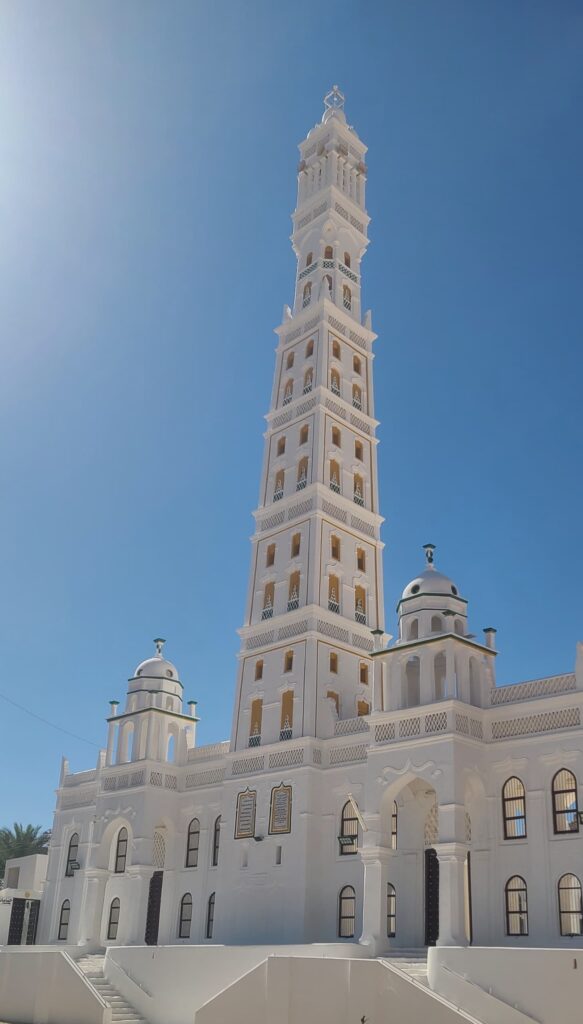
Located in the historic city of Tarim in Wadi Hadramout, the Al-Mihdar Masjid stands as one of Yemen’s most iconic Islamic landmarks. Renowned for its unique mud-brick architecture and spiritual atmosphere, this magnificent masjid has become a symbol of Hadrami identity and a must-visit destination for cultural and religious tourism.
The Beauty of Mud Architecture
What makes Al-Mihdar Masjid truly remarkable is that it was built entirely from mud using traditional Hadrami construction techniques that date back centuries. Its stunning minaret rises approximately 53 meters high, making it one of the tallest mud-brick minarets in the world. Every detail of its design reflects the skill and creativity of Yemeni craftsmen.
A Rich History and Spiritual Legacy
The masjid was constructed in the early 20th century under the direction of Sheikh Omar Al-Mihdar, who envisioned it as a center for learning and Islamic education. Since its establishment, it has remained a beacon of knowledge, attracting scholars, students, and visitors from across the Islamic world.
A Destination for Both Faith and Culture
Visiting the Al-Mihdar Masjid is more than just seeing an architectural masterpiece — it’s a spiritual journey. The peaceful atmosphere, combined with the elegance of mud-brick design, leaves every visitor in awe. Tourists often travel to Tarim not only to admire the masjid’s beauty but also to experience Hadramout’s living heritage.
Location and Accessibility
The masjid is situated in the heart of Tarim city, surrounded by traditional schools, old libraries, and historic homes. It can be easily reached via the Seiyun–Tarim road, and visitors will find nearby accommodations and restaurants offering authentic Hadrami cuisine.
The Al-Mihdar Masjid remains one of the most extraordinary symbols of Yemeni Islamic architecture — a place where faith, art, and history come together. No visit to Hadramout is complete without standing before this majestic monument, a true masterpiece of mud architecture and a testament to Yemen’s rich cultural legacy.