Baqshan Palace: A Masterpiece of Mud Architecture in Wadi Doan, Hadhramaut
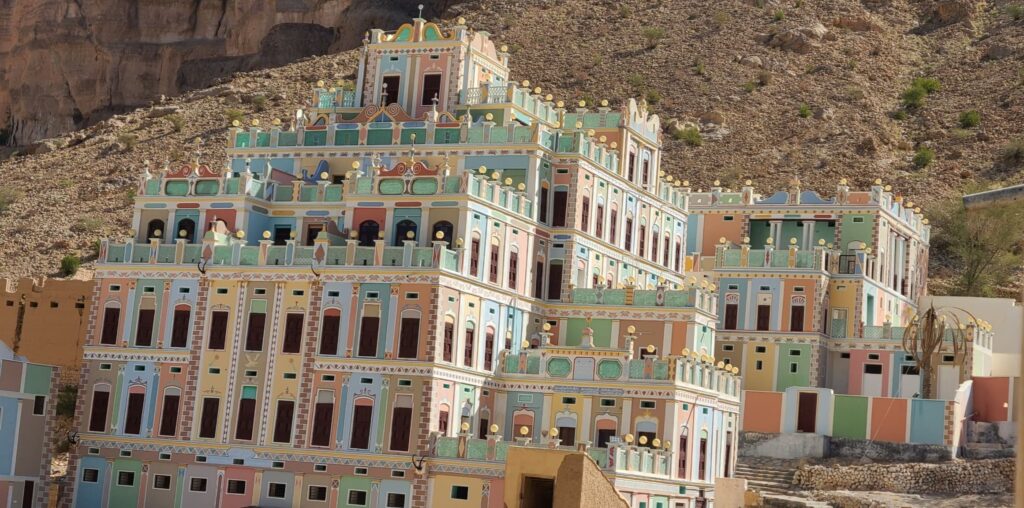
Baqshan Palace stands as one of the most iconic heritage landmarks in Hadhramaut, located in the heart of Wadi Doan. The palace represents a remarkable example of traditional Yemeni mud architecture, admired for its unique design, towering presence, and historical depth.
Historical Background of Baqshan Palace
The palace is situated in the village of Khaila Baqshan in Wadi Doan, Hadhramaut. Some historical sources suggest that its original construction dates back to the late 18th century, while others indicate that the current form of the palace was rebuilt in the mid-20th century by Ahmed Saeed Baqshan. Despite modifications over the years, the palace has preserved its traditional mud-brick identity and architectural charm.
Architecture and Design
Baqshan Palace is a beautifully engineered structure built entirely from mud, wood, and natural materials. The palace consists of around eight floors in addition to the ground level. It includes more than 30 rooms, featuring intricately carved wooden doors and windows made from local woods such as al-‘alb and sider.
One of the palace’s most impressive architectural features is the central light well known as the “Shamsa.” This vertical opening extends from the rooftop down to the lowest floor, allowing natural sunlight to illuminate the interior—a brilliant design element that defines the palace’s character.
Cultural and Touristic Importance
Baqshan Palace is considered a symbol of Yemen’s ancient architectural heritage and a key tourist attraction in Wadi Doan. It draws visitors, architecture lovers, and photographers fascinated by mud-brick engineering and traditional Hadhrami craftsmanship. The palace reflects the ingenuity of local builders who created tall and durable structures using simple natural materials.
Tips for Visiting Baqshan Palace
- Visit during early morning or late afternoon for the best lighting and photography conditions.
- Wear comfortable footwear, as paths around the palace may be uneven.
- Consider hiring a local guide to learn about the palace’s history, craftsmanship, and cultural relevance.
- Respect the site by avoiding touching delicate mud structures.
Baqshan Palace is more than just a mud-built fortress; it is a preserved piece of Hadhramaut’s cultural memory. Visiting the palace offers a rich experience blending history, architecture, and breathtaking scenery. It stands as a testament to the artistic and engineering mastery of traditional Yemeni builders, making it a destination worth exploring.