6 Stunning Hadramout Historical Sites You Must Explore
Yemen is home to some of the world’s most breathtaking architectural wonders, and the valley of Hadramout stands as the crown jewel of this heritage. Visiting Hadramout historical sites feels like stepping into a living history book, where mud, straw, and human ingenuity have defied time for centuries. From towering mud skyscrapers to castles perched precariously on mountain cliffs, this region showcases a unique building tradition found nowhere else on earth. The sheer resilience of these structures, coupled with the profound historical narratives behind them, makes this valley a legendary destination for historians and travelers alike. Let’s embark on an extensive journey through six of the most iconic landmarks that define this magical landscape.
Table of Contents
1. The Sultan Al-Kathiri Palace in Seiyun
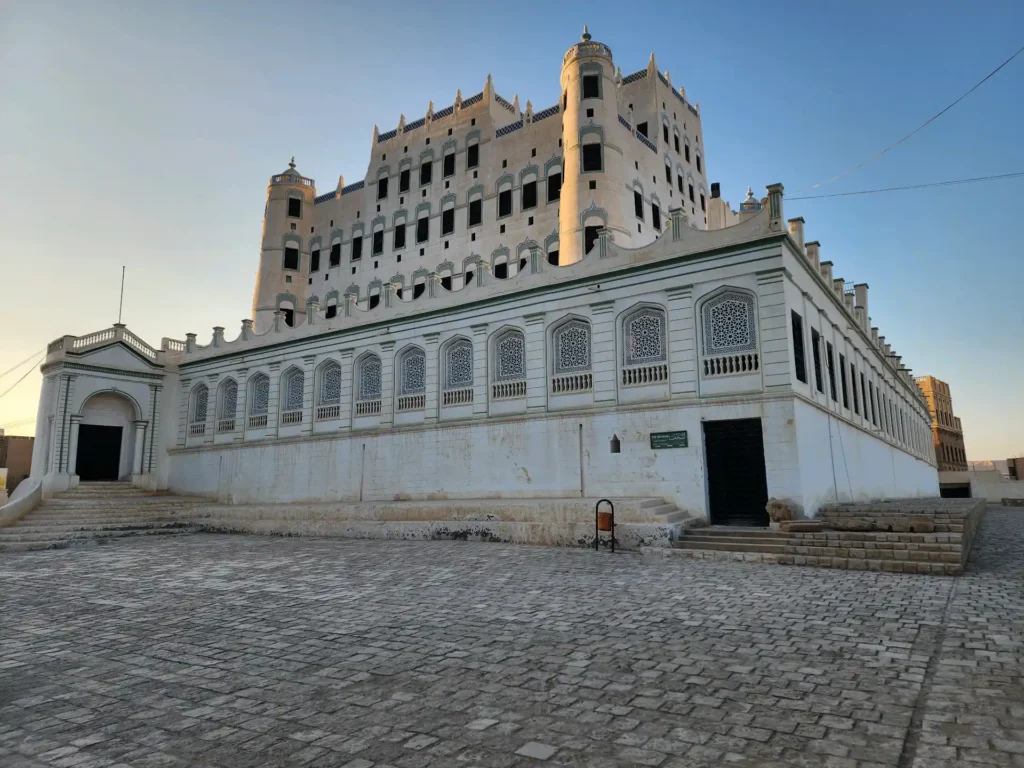
Located in the heart of Seiyun, the Sultan Al-Kathiri Palace is one of the most magnificent mud-brick structures in the world. Often referred to as the “White Palace,” this stunning seven-story building served as the base for the Kathiri sultanate, ruling over much of the region for generations. Today, it stands as a proud symbol of ancient Yemeni architecture, housing a museum that showcases the rich history, archaeological finds, and royal heritage of the valley. Its gleaming white facade against the backdrop of golden limestone cliffs is a sight you will never forget.
Architecturally, the palace is a marvel of traditional construction techniques. Built entirely of sun-dried mud bricks and fortified with wooden beams, it demonstrates how master builders created massive, multi-tiered royal compounds without the use of modern concrete or steel. The interior features dozens of rooms, grand reception halls, and intricate wooden windows that allowed for cross-ventilation, keeping the palace cool during the intense summer heat. It stands as a testament to the sophistication of royal life in the heart of the valley.
2. Shibam Hadramout: The Manhattan of the Desert
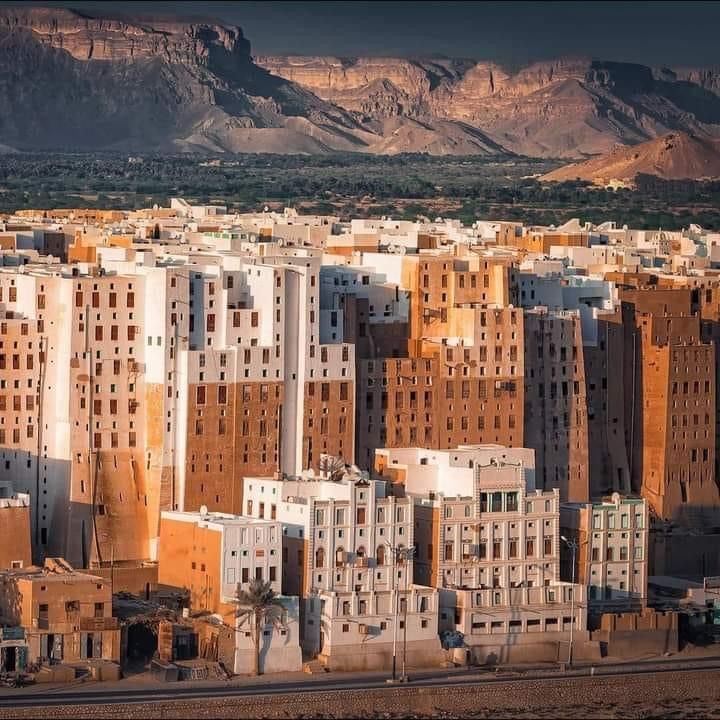
No exploration of Hadramout historical sites is complete without visiting the legendary walled city of Shibam. Rising dramatically from the desert floor, Shibam is famous for its 500-year-old mud skyscrapers, some reaching up to eleven stories high. This UNESCO World Heritage site represents one of the earliest and most successful examples of urban planning based on the principle of vertical construction. Walking through its narrow, shaded alleys makes it easy to see why travelers dubbed it the “Manhattan of the Desert.”
The layout of Shibam was born out of a necessity for defense. Surrounded by a fortified wall, the city could not expand horizontally, forcing its residents to build upward to accommodate a growing population. Each skyscraper belongs to a single family, with lower floors originally used for storing grain and housing livestock, while the upper floors served as living spaces and formal guest rooms. The engineering behind these structures relies heavily on constant maintenance, as the outer mud plaster must be recoated regularly to protect the walls from torrential seasonal rains. It remains a pinnacle of human adaptation.
3. Al-Muhdhar Mosque and its Iconic Minaret
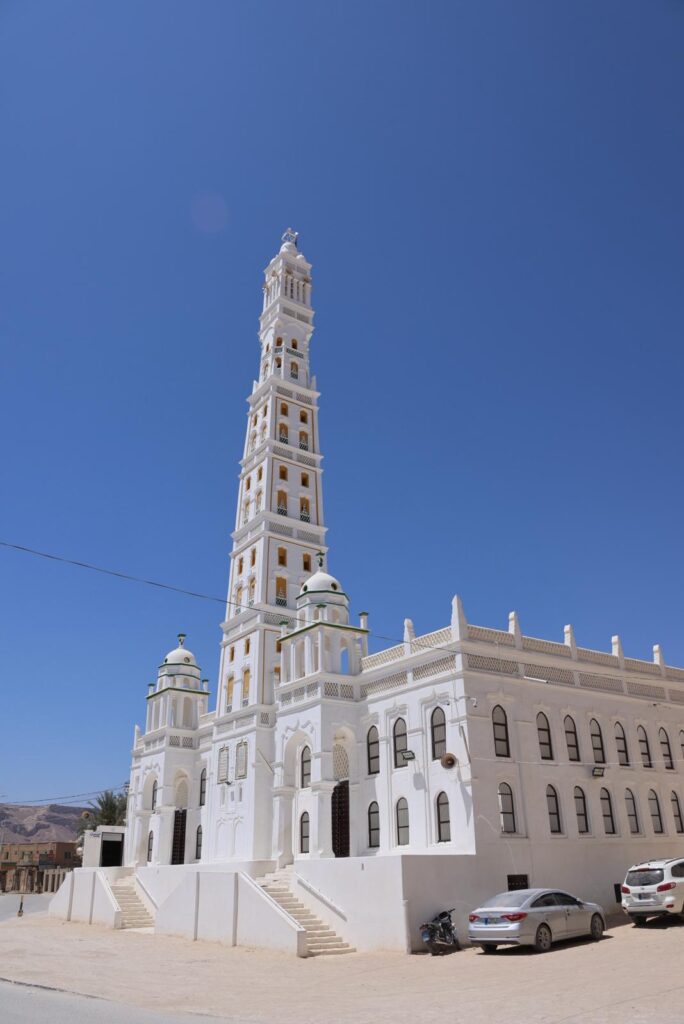
In the historic city of Tarim, the center of Islamic scholarship and spiritual learning in the valley, lies the breathtaking Al-Muhdhar Mosque. What makes this mosque a standout among cultural tourism in Yemen is its spectacular minaret. Standing at approximately 46 meters (151 feet) tall, this square, tapering tower is constructed entirely from sun-dried mud bricks and lime plaster. It reigns as one of the tallest mud structures on the planet, showcasing the incredible engineering capabilities of traditional Yemeni builders.
The minaret was designed by local master architect Abu Bakr bin Shihab and built in the early 20th century. Its clean geometric lines and pure white finish command the skyline of Tarim, visible from miles away. The structure requires incredible balance and precise weight distribution to prevent the heavy mud from collapsing under its own weight. Inside, a narrow staircase winds up to the top, where the call to prayer has echoed across the valley for decades, reinforcing Tarim’s legacy as a beacon of architectural innovation and religious history.
4. Baqshan Palace in Wadi Do’an
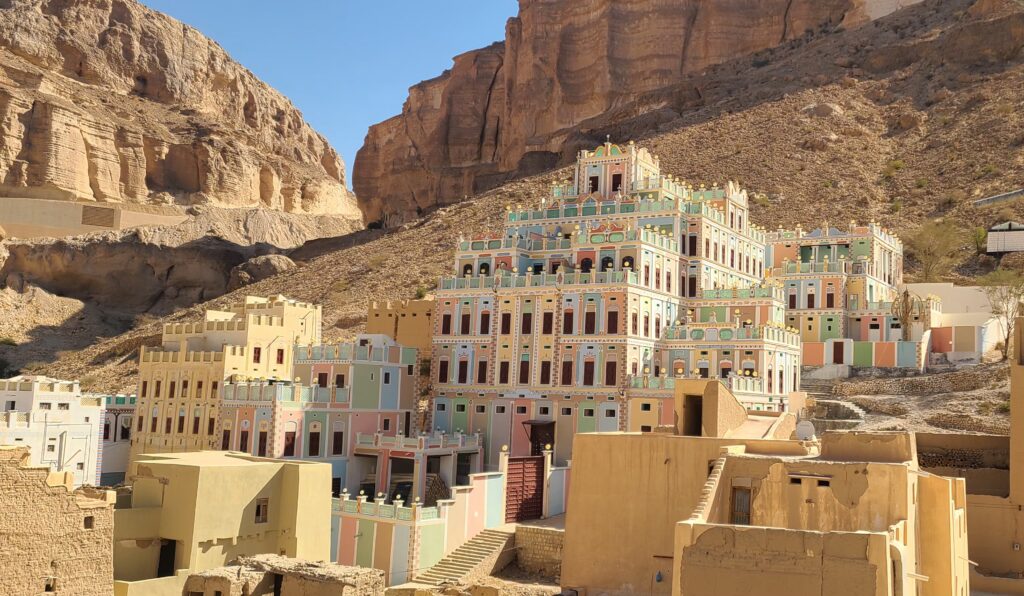
Deep within the winding, dramatic canyon of Wadi Do’an sits the vibrant Baqshan Palace in the village of Khaila. Unlike the stark white or earthy tones of other traditional buildings, this multi-story palace is famous for its brightly colored exterior, painted in pastel hues of green, yellow, blue, and pink. It serves as a masterful example of how local communities blended decorative artistry with traditional mud construction, making it a favorite stop for anyone exploring the architectural diversity of the region.
Built originally in the mid-20th century by a prominent local family, the palace spans multiple levels and features elaborate wooden lattices, painted ceilings, and spacious courtyards. The use of vibrant colors was not merely stylistic; it served as a reflection of the wealth and global connections of Hadrami traders who traveled across the Indian Ocean and returned with diverse cultural influences. Today, the palace stands beautifully restored, acting as a gateway to understanding the artistic expression woven into the valley’s rural villages.
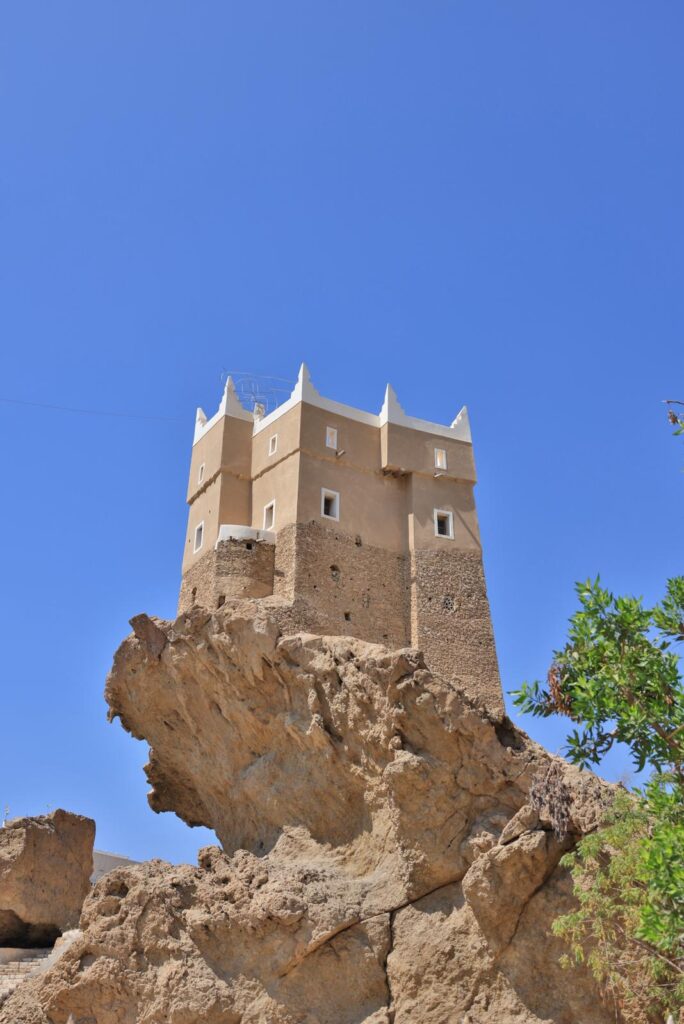
5. Al-Gwayzi Fort: The Guardian of Mukalla
As you leave the inland valleys and head toward the Arabian Sea coastal capital of Mukalla, Al-Gwayzi Fort welcomes you. Perched precariously on a massive detached rock at the foot of the mountains, this fort was built in the early 18th century to protect the city from land-based attacks. It is an engineering marvel that seamlessly blends natural geology with military fort planning, solidifying its place among the most dramatic historical landmarks of Hadramout.
The fort consists of two main floors and several watchtowers designed to give guards a 360-degree view of the surrounding valleys and mountain passes. Its foundations are literally molded into the uneven surface of the boulder, making it look as if the building grew naturally out of the stone itself. Al-Gwayzi Fort served as a crucial defense post during various tribal conflicts and foreign incursions, and today its silhouette stands as the ultimate symbol of Mukalla’s resilience and historical strategic importance.
The Sustainable Genius of Hadrami Architecture
When studying these incredible Hadramout historical sites, one cannot overlook the sustainable genius behind their construction. Long before modern green building movements existed, the people of this region perfected eco-friendly architecture. By using clay, straw, animal dung, and local timber, they created buildings with massive thermal mass. This means the thick mud walls absorb the scorching heat during the day and slowly release it during the cool desert nights, providing natural temperature regulation without any external energy source.
Furthermore, the maintenance of these buildings is a deeply communal affair. The art of mud brick making and plastering is passed down through generations of master builders. It requires a profound understanding of local geology, climate cycles, and material science. This living heritage ensures that as long as the knowledge is preserved, these ancient monuments will continue to stand proud against the elements.
Challenges in Preserving the Living Heritage of Yemen
Despite their historical grandeur, these fragile masterpieces face unprecedented challenges in the modern era. Climate change has led to increasingly volatile weather patterns, resulting in unprecedented flash floods that pose a severe threat to mud-based architecture. Without consistent restoration and funding, the water can erode the protective plaster coatings, threatening the structural integrity of centuries-old skyscrapers and palaces.
International organizations, alongside dedicated local communities, continue to work tirelessly to document, repair, and protect these sites. Supporting sustainable cultural tourism and raising global awareness about the value of Hadrami architecture are essential steps in guaranteeing that future generations can witness the majesty of these desert marvels.
Why Hadramout’s Heritage Matters
The legendary Hadramout historical sites represent much more than mere remnants of a bygone era; they are the beating heart of Yemen’s cultural identity. From the towering heights of Shibam to the artistic brilliance of Buqshan Palace, each structure tells a story of survival, creativity, and harmony with nature. As we look to the future of architecture and sustainable living, the lessons embedded in these mud walls remain incredibly relevant. Protecting this invaluable heritage is a collective responsibility, ensuring that the magic of Hadramout continues to inspire the world for centuries to come.
What is the most famous historical site in Hadramout?
The walled city of Shibam, known as the Manhattan of the Desert,” is widely considered the most famous site due to its unique 16th-century mud-brick skyscrapers and UNESCO World Heritage status.
What materials were used to build the Sultan Al-Kathiri Palace?
The palace was built using traditional mud bricks (made of clay, straw, and water) and coated with a traditional waterproof lime plaster called Qudad, giving it its signature white appearance.
How tall is the minaret of Al-Muhdhar Mosque?
The minaret of Al-Muhdhar Mosque in Tarim stands at roughly 46 meters (151 feet) tall and is famous for being made entirely out of mud.
Where is Al-Gwayzi Fort located?
Al-Gwayzi Fort is located at the northeastern entrance of the coastal city of Mukalla, the capital of the Hadramout governorate.
Why is Baqshan Palace unique compared to other mud buildings?
Unlike most traditional earth-toned mud structures in Hadramout, Baqshan Palace is uniquely celebrated for its vibrant, multi-colored pastel painted exterior walls.